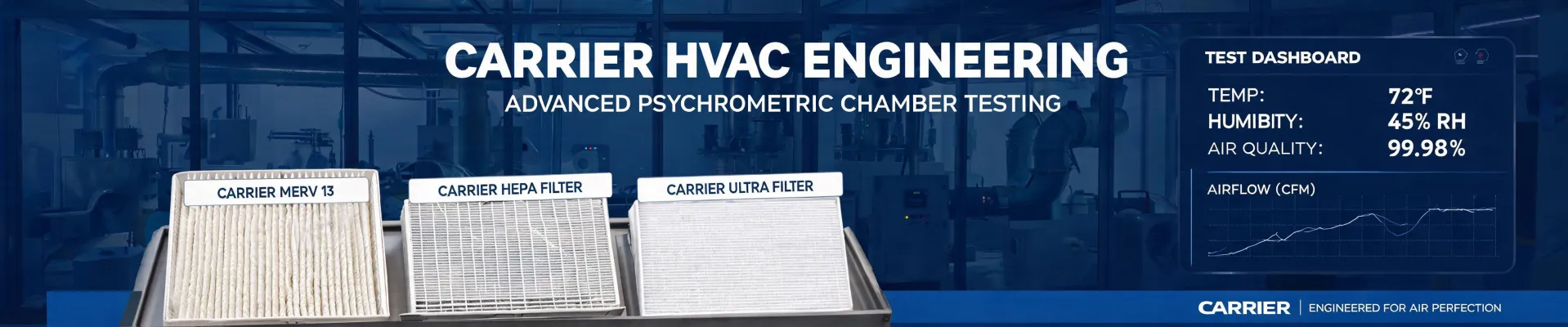
On a Sunday in October 2022, I was staring at the filter slot on my own Carrier furnace, trying to remember when I'd last changed it. I knew the answer should have been three months ago. The filter looked like it had swallowed a dust bunny. That moment was embarrassing for a guy who spends his workdays telling customers not to skip filter changes.
I've been handling HVAC service orders for 12 years. I've personally made and documented 23 significant mistakes, totaling roughly $18,000 in wasted budget. Most of those were small, dumb things: wrong part, missed step, forgotten follow-up. The filter problem was one of them.
When I first started in the trade, I assumed a filter replacement was just a filter replacement. You pull the old one out, slide the new one in, call it done. Twelve years later, I realize the filter is the cheapest insurance you can buy for a heating and cooling system.
The mistake that started all of this
In the spring of 2022, I was in a hurry. I knew I should have written the date on the filter frame before I closed the access panel. But I thought, what are the odds? I'll remember it this time. I didn't remember it.
Carrier air conditioners are pretty reliable, in my experience. But they're not magic. A clogged filter starves the airflow, and a system that can't breathe works harder. The blower motor on my own unit gave up in July, during the hottest week of the year. The repair cost $890, and the part took five days to arrive. I learned the hard way that a $12 filter is not worth ignoring.
That is when I started treating Carrier furnace filter replacement as a maintenance ritual instead of an afterthought. Why does this matter? Because the filter is the first line of defense for the blower motor, the evaporator coil, and the compressor. Skip it, and you're basically betting a $5,000 system on a $12 part.
After the repair, I created a pre-check list for every service call. In the 18 months since then, my team has caught 47 potential problems before they turned into late-night emergency calls. The list isn't fancy. It starts with the filter.
That filter failure sent me into a weird appliance mindset. Over the next few months, I started noticing every place where quality was being traded for features.
Why I switched to a French door refrigerator without water dispenser
The same month my blower motor died, our old refrigerator started acting nervous. The ice maker made grinding sounds, and the water dispenser dripped onto the floor no matter how many times I replaced the little rubber valve. A repair friend told me something I didn't want to hear:
Most fridge service calls are not about keeping food cold. They're about water lines, dispensers, and icemakers.
So I chose a French door refrigerator without water dispenser. It felt weird to pay good money for what looked like a stripped-down version of the fancier model. My initial instinct was that a refrigerator without a dispenser was a downgrade. But after five months, I can tell you honestly: I'd rather have one fewer failure point than one more way to spill water on the kitchen floor.
Even after choosing it, I kept second-guessing. What if I missed having cold water at the door? What if the lack of an icemaker made dinner parties inconvenient? The first two weeks after delivery were stressful. I didn't relax until the fridge held a steady 37 degrees and the drawers stayed dry. In the end, the no-dispenser version looks cleaner anyway, because there's no little drip tray to scrub.
What I mean is, a refrigerator is not just a box that keeps food cold. It's a visible part of your kitchen. A clean, simple French door design makes a better impression than a model with a stained dispenser pad. The small difference in price translated into a noticeably calmer kitchen.
The best induction cooktop brand rabbit hole
After the fridge came the cooktop. I did what everyone does: I typed best induction cooktop brand into a search engine and fell into a rabbit hole that lasted a week.
The problem wasn't a lack of opinions. There were a ton of lists. Every list claimed a different winner. Some favored sleek European brands, others swore by big-box names. I kept asking myself: what does best actually mean? It can mean most durable, easiest to repair, fastest to boil, or most likely to be in stock when you need a replacement burner.
Here is the thing: I finally ordered a unit from a brand I'd seen in the field, not because it topped a YouTube comparison, but because their induction coils had a low failure rate in the units I'd serviced and the local parts supplier stocked the burners. That practical detail mattered way more than the brand sticker on the front.
After I hit confirm, I immediately wondered if I had made the right call. Did I overpay for a name? Or under-spend on a tool I'd use every day? The two weeks until delivery were full of doubt. Then the cooktop arrived, boiled water in under two minutes, and I stopped second-guessing.
By the way, whenever you see best in a headline, remember that under FTC advertising guidelines, a claim like that needs to be truthful and substantiated. That doesn't mean every list is dishonest. It just means best is usually shorthand for best for the person who tested it. For me, the best induction cooktop brand is the one that works when I need it and can be repaired when it doesn't.
Wait, can a chest freezer be used as a refrigerator?
A client asked me that exact question while I was finishing a routine check on their Carrier air conditioner. They had an empty chest freezer in the garage and wanted to use it as extra refrigerator space without buying a second fridge.
Technically, yes. You can connect a chest freezer to an external temperature controller that turns it off around 38 degrees Fahrenheit. People have done this for years, and there are forums full of success stories. But I don't recommend it as a permanent setup.
Why? First, a chest freezer is designed to run extremely cold and dry. Set it to refrigerator temperature and it becomes a very humid box. Condensation builds up, and food at the bottom can freeze while food at the top stays too warm, depending on what is on the shelves. Second, the lid-open design means every time you open it to dig out some carrots, cold air falls out and warm air rushes in. That temperature swing is exactly what you don't want with dairy or leftovers.
Look, I'm not saying the hack never works. I'm saying that when the whole point is saving money, the hidden cost is risk. A $100 controller and a $300 freezer can spoil a $200 batch of groceries. The person who sees that is not thinking about your clever hack. They're thinking about the wasted food. That is a quality perception problem, and it applies to a dead fridge as much as a dead furnace.
What all of this taught me about quality
Quality is not about picking the most expensive thing. It's about matching the product to the real problem. A Carrier furnace with a dirty filter is worse than a budget furnace with a clean filter. A French door refrigerator without a water dispenser can be more reliable than a fancier model with more failure points. The best induction cooktop is the one that fits your cooking habits and your ability to fix it. And a chest freezer used as a refrigerator can be a clever idea, until it turns into a science experiment.
I'm not here to tell you that Carrier is the only brand worth installing. I've seen other brands do good work. But the habits around the equipment are what separate a long-lasting install from a headache. A filter costs less than a service call. A simple fridge design costs less than a repair. A practical cooktop choice costs less than a return-and-exchange cycle. Those decisions add up, and your customers notice.
If you remember one thing from this story, let it be this: write the date on your filter. It sounds too simple to matter. So did the blower motor repair bill I didn't think I'd ever get.

Greta Lindholm
Greta Lindholm is a household refrigeration analyst covering French-door, side-by-side, top- and bottom-mount refrigerators, mini fridges, beverage coolers, chest freezers, and upright freezers. She applies IEC 62552 and IEC 60335-2-24 while comparing energy consumption, usable volume, pull-down time, compartment temperature stability, freezing capacity, noise, door-seal leakage, refrigerant charge, and ambient-temperature performance. Her guides help importers, distributors, private-label teams, and appliance engineers select platforms around climate class, storage mix, efficiency labels, cabinet dimensions, service access, shipping density, and warranty exposure.
Leave a Reply