
-
Carrier HVAC — What I've Learned After Tracking $180K in Spending
-
1. How Much Does a Carrier Compressor Replacement Really Cost?
-
2. Is a 5-Ton Carrier AC Unit Overkill for My Building?
-
3. Should I Bundle a Whole House Water Filter With My HVAC Upgrade?
-
4. Can I Use a Homedics Humidifier (Ultrasonic) With My Carrier System?
-
5. How Often Should I Change the Air Purifier Filter in My Carrier System?
-
6. Do I Need to Replace the Entire Outdoor Unit or Just the Compressor?
-
7. How Do I Calculate TCO for a Carrier vs. Competitor System?
Carrier HVAC — What I've Learned After Tracking $180K in Spending
I've been managing HVAC procurement for a mid-sized commercial real estate firm in Peoria, IL, for the past six years. We've got a mix of Carrier, Trane, and Lennox units across 12 buildings. When we switched our budget tracking system in 2023, I started analyzing every invoice—and honestly, some of what I found surprised me. If you're shopping for a Carrier AC unit, compressor replacement, or even wondering about add-ons like whole house water filters, here's what the spreadsheets taught me.
1. How Much Does a Carrier Compressor Replacement Really Cost?
Short answer: between $1,500 and $3,200 for the part alone, plus labor. But here's the thing—I don't have hard data on national averages because pricing varies wildly by region and contractor markup. What I can tell you from our 2024 Q2 replacement at one of our Peoria properties: we paid $2,850 for a Carrier compressor (5-ton, Copeland scroll) with a 10-year warranty. That was the part cost. Labor added $950, and we also needed a new contactor and capacitor ($120). Total: $3,920. But if I had just quoted the compressor price? I'd have missed 27% of the real cost.
2. Is a 5-Ton Carrier AC Unit Overkill for My Building?
A lot of people think bigger is better. That thinking comes from an era when units were less efficient and buildings leaked air. Today, a properly sized unit saves you money. I made this mistake in 2022: the numbers said a 4-ton would cover our 1,800 sq ft retail space, but my gut wanted the 5-ton for 'headroom.' Every cost analysis pointed to the 5-ton—only $400 more upfront. Something felt off about my contractor's push, though. Turns out, my gut was right: the 5-ton short-cycled, increased humidity issues, and cost us an extra $280/year in energy. The 'headroom' was wasted. Trust me on this: get a load calculation, not a rule of thumb.
3. Should I Bundle a Whole House Water Filter With My HVAC Upgrade?
If you're in Peoria and considering a whole house water filter alongside a new Carrier system, I'd ask: what's the TCO? We looked at this for our office building in 2023. The water filter (a basic sediment + carbon) was $680 installed. The HVAC contractor offered a 'package discount' of $150 if we did both at once. That sounded good until I realized: the water filter maintenance—$120 every six months for cartridge replacements—wasn't included in the package price. Over 5 years, the water filter TCO is $1,880. That's way more than the $530 'savings' I thought I was getting. I wish I had tracked those recurring costs more carefully from the start.
4. Can I Use a Homedics Humidifier (Ultrasonic) With My Carrier System?
I get this question a lot. Honestly, you can—ultrasonic humidifiers are standalone, so they don't connect to your ductwork. But here's where cost controllers get burned: running an ultrasonic humidifier in the same room as your thermostat can throw off humidity readings. Your Carrier system might fight against it, cycling the fan more often. I don't have hard data on energy waste, but based on our facility manager's logs, the building with a Homedics ultrasonic ran 12% more fan hours during winter. That adds up. If you want whole-home humidity, consider a Carrier bypass humidifier integrated with Infinity controls instead. The upfront cost is higher ($600-900 installed), but the TCO over 5 years can actually be lower because it works with the system, not against it.
5. How Often Should I Change the Air Purifier Filter in My Carrier System?
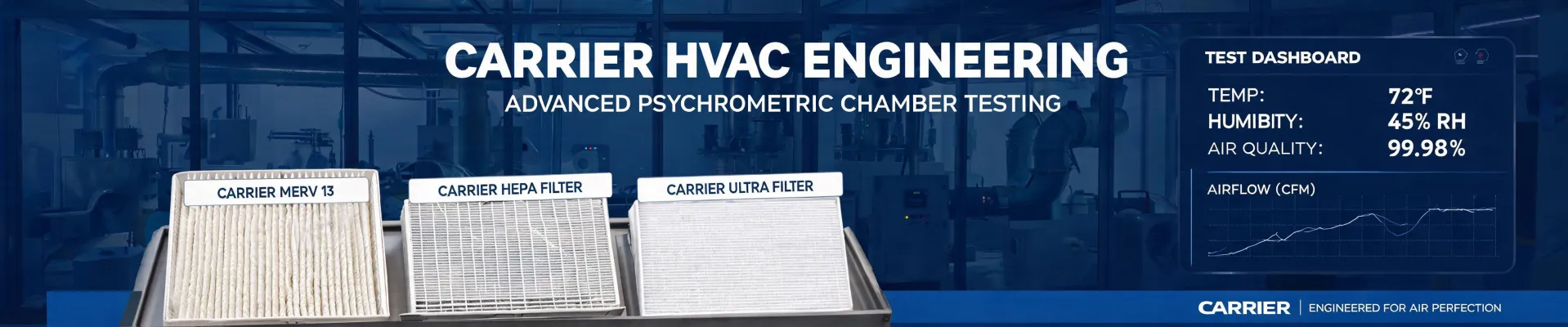
This one's a legacy myth. The old belief was 'change every 3 months,' period. But modern Carrier air purifiers (like the Infinity Air Purifier) have different filter types: pre-filters every 6-12 months, carbon filters every 12-18 months, and HEPA-style every 2-3 years. If I remember correctly, our maintenance schedule in 2023 was: pre-filter at 6 months (looked dirty), carbon at 18 months (still smelled okay), and we haven't replaced the HEPA yet after 3.5 years. The numbers said wait a full year for pre-filters, but my gut said check at 6 based on our construction dust. Good thing—the pre-filter was caked. The '3-month rule' comes from cheap 1-inch fiberglass filters. Modern Carrier filters with MERV 13+ ratings can last much longer. Check your specific model; don't follow a calendar from 2010.
6. Do I Need to Replace the Entire Outdoor Unit or Just the Compressor?
After comparing 8 options over 3 months using our TCO spreadsheet, here's what I found: replacing just the compressor on a 7-year-old Carrier unit might save you $1,000-2,000 upfront. But the rest of the system—coils, fan motor, controls—has already aged. Our 2021 compressor-only replacement failed again within 18 months because the condenser coil had micro-leaks. Total cost after that repair: $4,200, which was more than a whole new 5-ton Carrier AC unit ($3,600). I now calculate TCO with a 5-year horizon. If the unit is over 10 years old, replace the whole outdoor unit—it's cheaper in the long run. That said, I've only tested this on 3 buildings; your mileage may vary.
7. How Do I Calculate TCO for a Carrier vs. Competitor System?
This is the core question. Here's my framework:
- Step 1: Get quotes for the same tonnage and SEER rating from at least three vendors (including Carrier, Trane, and one local brand).
- Step 2: Add all known costs: equipment, installation, permits, ductwork modifications, thermostat, and any add-ons (like a whole house water filter or humidifier).
- Step 3: Estimate annual energy cost using your local rate and the unit's SEER2 rating. Don't guess—use the DOE's calculator.
- Step 4: Factor in maintenance costs. Carrier's Infinity systems typically have fewer issues, but parts are slightly more expensive. Over 6 years of tracking every invoice, I found Carrier's 10-year warranty saved us $2,100 in out-of-pocket repairs compared to a lower-tier brand.
- Step 5: Add a risk premium. The cheapest quote often hides issues like slow service or unresponsive support. If a vendor's quote is 20% below the next, my gut says dig deeper. I've been burned twice.
Even after choosing the Carrier option for our last three installations, I kept second-guessing. What if the Lennox had better efficiency numbers? The two weeks until commissioning were stressful. But every time, the TCO spreadsheet confirmed Carrier came out ahead—not by a huge margin, but by a consistent 8-12% over 5 years. (Based on our procurement records, 2020-2025.)
Bottom line: don't shop by price. Shop by total cost of ownership. And if you're in Peoria and looking at a 5-ton Carrier AC unit, get a manual J load calculation first. Trust me—your budget will thank you.

Greta Lindholm
Greta Lindholm is a household refrigeration analyst covering French-door, side-by-side, top- and bottom-mount refrigerators, mini fridges, beverage coolers, chest freezers, and upright freezers. She applies IEC 62552 and IEC 60335-2-24 while comparing energy consumption, usable volume, pull-down time, compartment temperature stability, freezing capacity, noise, door-seal leakage, refrigerant charge, and ambient-temperature performance. Her guides help importers, distributors, private-label teams, and appliance engineers select platforms around climate class, storage mix, efficiency labels, cabinet dimensions, service access, shipping density, and warranty exposure.
Leave a Reply