
Before I give you any advice, I need to say this clearly: there's no universal “worth it” answer. I've spent six years approving purchase orders for a 40-person property services company, and I've built a cost-tracking sheet for every major order. The biggest lesson I've learned? The cheapest upfront price rarely wins after you add installation, training, maintenance, and the cost of being wrong. The most expensive option rarely wins either. It depends on what you're replacing, who will use it, and how long you have to live with the decision.
In this article, I'll walk through four purchase decisions that keep showing up in my inbox: a 5 ton Carrier AC unit for a commercial space, a Navien tankless water heater, the KL100 smart bulb, and a question I still get asked every time we issue new phones: “Can you smart switch from Samsung to iPhone?”
1. A 5 Ton Carrier AC Unit: When the Premium Is Justified
Last summer, the compressor on a 5 ton Carrier AC unit at a retail strip finally died. Three contractors bid the replacement. One came in around $11,200 with new line sets, a crane, and a thermostat included. Another came in at $8,900, and I almost told the building owner to take it. Then I checked the line items. The lower bid didn't include the crane, the line-set replacement, or the labor to patch the roof penetration. Once those were added, the total was around $10,400. I want to say the exact numbers were different, but don't quote me on the details. The point is the gap looked huge until I added missing line items. That's a 7% difference, not the 26% the initial quote suggested.
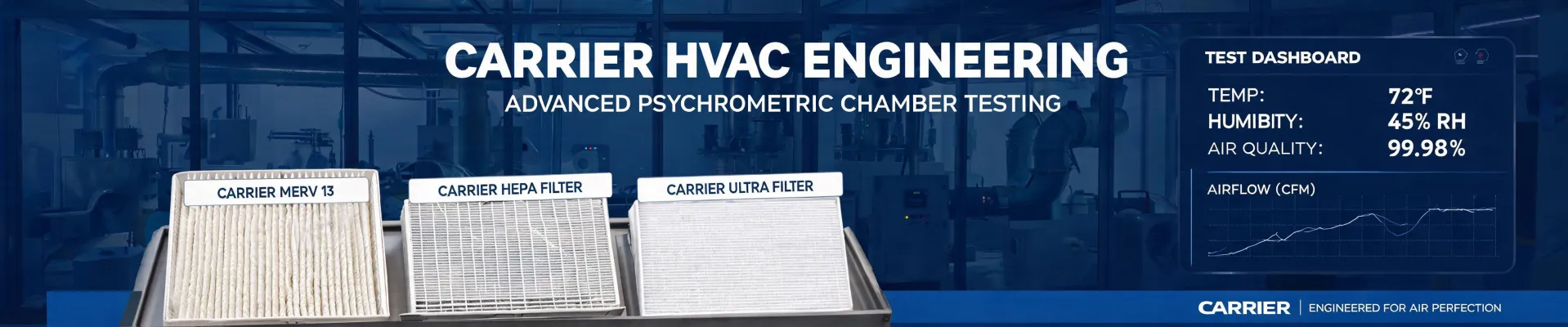
Carrier's Infinity line with variable-speed compressors is probably worth the premium if the space is occupied all day and you care about dehumidification. The part-load efficiency is real. But if the building is a warehouse that needs basic cooling, a standard 5 ton Carrier AC unit with a single-stage compressor will likely do the job. I'm not an HVAC engineer, so I can't speak to the exact load calculations, but I know a balanced quote when I see one. Let me rephrase that: a balanced quote is one where every contractor is priced against the same scope.
The value of a guaranteed delivery date isn't speed; it's certainty. A lower quote with an “estimated” six-week lead time is not cheaper if your tenants can't use the building. The Carrier logo matters too, but not the way salespeople talk about it. When a Carrier logo is visible on a rooftop unit or in a mechanical room, it tells tenants, inspectors, and potential buyers that the mechanical system is a known brand. I've watched that perception carry weight in a building sale. But a logo on a sloppy installation does the opposite. It says the owner paid for the badge but not for the skill.
2. Is a Navien Tankless Water Heater Worth the Upgrade?
Navien tankless water heaters get specified a lot because they deliver continuous hot water in a compact footprint. That's a genuine advantage for a gym or a building where everyone showers at the same time. In our portfolio, the payback on a Navien tankless water heater has usually been four to six years when there's steady demand. If the building uses hot water in short peaks and then sits idle, the payback can stretch past the warranty period, and the premium starts to look like a luxury.
I'm not a plumbing engineer, so I can't speak to the heat exchanger chemistry or local code requirements. What I can tell you from a cost perspective is this: get the full package priced before you compare. A Navien installation often needs a condensate neutralizer, a recirculation kit, and a water filter. Those add-ons can turn a “cheaper” quote into a more expensive one. To be fair, a tankless unit also frees up floor space in the mechanical room, and that can be worth a lot in a tight building.
My sample size here is small—three commercial retrofits I've managed—so if you're working on a 30-unit multifamily project, your numbers might differ. But the principle stays the same: calculate the total installed cost, not the unit price.
3. The KL100 Smart Bulb: Convenience That Costs More Than the Bulb
The KL100 smart bulb got my attention because it doesn't require a hub and screws into standard sockets. For a restaurant we were re-lighting, that meant no rewiring and no extra electrician hours. I installed one in the office for 30 days. The app worked, the color adjustment was fine, and I liked being able to set a different color temperature for the afternoon. What I didn't expect was the operational cost. Staff kept flipping the wall switch off, which killed power to the bulb and made it drop offline. The workaround—training people to use the app or leave the switch on—took more time than the bulb itself.
The KL100 is not the cheapest smart bulb on the market, but it's far from the most expensive. I think the middle position is fair. For a lobby or dining room where color quality affects the customer's mood, a bulb with consistent color and reliable app support is worth paying for. A cheap bulb that flickers can make the whole space feel lower-end, and that defeats the point.
Granted, a smart bulb isn't always the right answer. If you only need on/off scheduling, a smart switch is likely cheaper and less complicated. The bulb makes sense when you want color changes in existing fixtures and don't want to rewire. Just build in a line item for staff training and troubleshooting.
4. Can You Smart Switch From Samsung to iPhone?
This question feels out of place in a procurement article, but our office manager asks me every time we issue new phones. So: yes, you can move your data from a Samsung to an iPhone, but you probably won't use Samsung's Smart Switch app to do it. Samsung Smart Switch is designed to move data from an iPhone to a Samsung—not the other way. Apple's Move to iOS app is the tool that goes from Samsung to iPhone. It handles contacts, photos, messages, and some settings reasonably well.
“Smart switch” is marketing language. What it leaves out is the migration cost. After the data moves, someone has to sign back into every app, re-pair Bluetooth devices, and transfer two-factor authentication codes before the old phone is wiped. If you're doing this for one phone, that's an afternoon. If you're doing it for 15 field technicians, that's a day of lost field time each. Add new cases, chargers, and any paid apps that don't transfer, and the “free” switch has a real total cost.
Also check with your cellular carrier about eSIM transfer fees and plan changes. That's the kind of small item I catch by reading the fine print.
How to Decide Which Scenario You're In
I don't like ending advice with “it depends,” because the whole point of a cost controller is to make the decision clearer. Here's how I make the call.
- If a failure creates a comfort emergency—no AC in July, no hot water for a shower—pay for reliability, warranty coverage, and a local service network. That's usually Carrier for HVAC and Navien for tankless, but only if the full install is priced correctly.
- If the product has a software layer, like the KL100 smart bulb or a phone OS migration, pay for compatibility, training, and support. The hardware is only part of the total ownership cost.
- If the brand logo is part of your property's story, treat it like a real asset. Get the Carrier logo printed or displayed correctly. Ask for a proof, check the color, and don't accept a washed-out sign. Pantone's color matching system guidelines set the tolerance at Delta E below 2 for brand-critical colors. For large-format signage viewed from a distance, 150 DPI is usually acceptable. I'm not a print specialist, but I know an off-brand logo makes the whole mechanical room look less professional.
One more thing: register the warranty. Carrier and Navien both have registration windows, and a missed registration can shorten a warranty by years. On a 5 ton Carrier AC unit, that difference can be thousands of dollars if a compressor fails. It takes five minutes and it's the cheapest insurance you'll ever buy. That's the same logic I use for a Carrier heat pump, furnace, or ductless mini-split: match the equipment to the actual load, not to the product brochure.
At the end of the day, I'm not loyal to any brand. I'm loyal to the total cost of ownership. If you can name the problem you're solving and the time horizon you're buying for, the “right” answer gets a lot clearer.

Greta Lindholm
Greta Lindholm is a household refrigeration analyst covering French-door, side-by-side, top- and bottom-mount refrigerators, mini fridges, beverage coolers, chest freezers, and upright freezers. She applies IEC 62552 and IEC 60335-2-24 while comparing energy consumption, usable volume, pull-down time, compartment temperature stability, freezing capacity, noise, door-seal leakage, refrigerant charge, and ambient-temperature performance. Her guides help importers, distributors, private-label teams, and appliance engineers select platforms around climate class, storage mix, efficiency labels, cabinet dimensions, service access, shipping density, and warranty exposure.
Leave a Reply