
I'll say it plainly: the cheapest option is usually the most expensive one I've bought. I manage a roughly $310,000 annual facilities and maintenance budget for a 90-person company. I've tracked every invoice for six years, audited our 2023 spending line by line, and negotiated with dozens of vendors. When I audited our 2023 spending, I found that the savings from low quotes disappeared into change orders, failed parts, and wasted hours. That's why I keep coming back to total cost of ownership. And it's why I'd rather see a Carrier furnace installation in Lakewood done right the first time than pay for a second chance.
Six Years of Tracking Invoices Changed My Mind
It's tempting to think you can just compare unit prices. But identical specs from two vendors can produce wildly different results. I learned that with a generic valve, a mini fridge, and a stack of light bulbs. In every case, the cheapest price hid something that didn't show up until after the invoice was paid.
Here's something vendors won't tell you: the first quote is rarely the final price for an ongoing relationship. Once you prove you're a regular buyer, there's room to negotiate. But for a one-time purchase, the low number is often low because a line item is missing.
Why does this matter? Because the gap between the quoted price and the delivered cost is exactly where projects go wrong. A line item isn't a detail. It's a decision.
Three Deals That Cost More Than I Saved
1. A mini fridge that popped all night
Someone at the office asked why does mini fridge make popping noise. I don't remember the brand of that little fridge—it was an internet special—but I remember the math. The noise was thermal expansion, which is usually harmless. But this fridge popped so loudly that people unplugged it during calls. We lost about $110 of food, I spent an hour troubleshooting, and then we bought a replacement. The $90 fridge ended up costing over $300.
2. Smart lighting bulbs that weren't so smart
If you're shopping for smart lighting bulbs, you already know the price gap is wild. A cheap bulb might look like a bargain until it disconnects from the WiFi network, flickers on schedule, or stops working after eight months. The resetting time is a cost. The replacement is a cost. The late-night ceiling work is a cost.
I made the same mistake with GE water dispenser parts. The generic valve cost $18. The OEM part was $37. I thought I was being smart. Four weeks later the generic valve leaked, and we spent $180 on drying and patching. The OEM part was the cheap part.
3. Free phone service isn't free
Whenever I see someone look up wifi calling iphone without carrier, I understand the goal. Most people don't want a monthly bill. But the workaround usually has a hidden price: an app that breaks after an update, unreliable call quality, or no dependable emergency address. The question isn't whether you can avoid the carrier. The question is what happens when the Wi-Fi drops.
Furnace Installation Is Not a Commodity
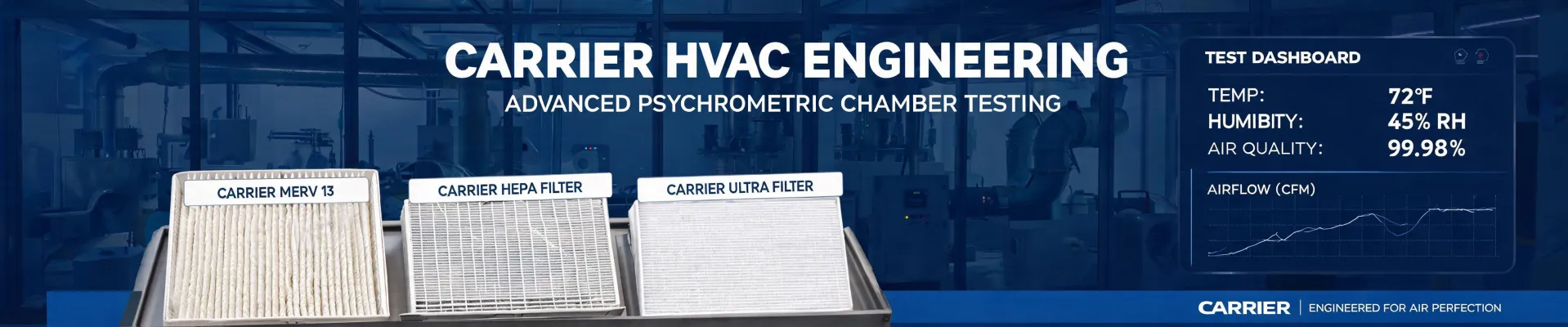
Now scale that logic up to a Carrier furnace installation in Lakewood. A furnace isn't a bulb you can replace with a trip to the store. It's connected to your gas line, ductwork, electrical panel, local permits, and warranty paperwork. If you choose the lowest equipment-only quote, you might save $1,000. But the change orders, code violations, skipped tests, and rework can turn that $1,000 saving into a $3,000 loss.
What most people don't realize is that the lowest bid usually excludes the expensive parts of a good installation. A permit is a few hundred dollars. A duct adjustment can cost over a thousand. A static pressure test takes an hour. A warranty registration takes five minutes. The cheap quote doesn't show any of those because the contractor isn't planning to do them.
After comparing eight vendors over three months on a similar project, I found that the gap between the cheapest quote and the most detailed quote was mostly scope, not profit. The expensive quote wasn't expensive because the contractor was greedy. It was expensive because it included work the cheap quote simply left out.
I always verify efficiency ratings in the AHRI directory (ahridirectory.org) using the model's Certified Reference Number. As of March 2025, that's still the standard I compare against. If a model isn't listed, I don't care how good the brochure looks.
I also read the warranty terms carefully. Carrier publishes its warranty terms clearly, but registration matters. A missed registration can turn an included compressor into a paid repair. That's a hidden cost you only hear about after the failure.
The Objection I Always Hear
So you're saying pay more and stop complaining? No. I'm saying pay for what the product costs to own.
In Q2 2024, we switched vendors on a different contract because their total cost was lower, even though their quote wasn't the lowest. We saved 17% of that budget by choosing the vendor who delivered faster, communicated better, and didn't add surprises. That's not an argument for expensive. It's an argument for looking past the first number.
Look, sometimes the low bid is fine. I'm not saying every low bid is a trap. I'm saying you need to know what's included before you sign.
Let me rephrase that: I'm not anti-cheap. I'm anti-fake-cheap.
My Final Take
Value over price. That's my answer, and I don't expect that to change. If you're planning a Carrier furnace installation Lakewood project, compare the full scope, not the sticker. If you're adding smart lighting bulbs, compare lifespan and replacement hassle. If you're buying GE water dispenser parts, compare the cost of a leak. If you're trying wifi calling iphone without carrier, test what happens when the network is bad.
And if you were wondering why does mini fridge make popping noise, it's usually just the refrigerant lines expanding. But it's also a reminder: the price tag doesn't tell you what the product will cost you later. I've made that mistake more times than I like. I just got tired of paying for it twice.

Greta Lindholm
Greta Lindholm is a household refrigeration analyst covering French-door, side-by-side, top- and bottom-mount refrigerators, mini fridges, beverage coolers, chest freezers, and upright freezers. She applies IEC 62552 and IEC 60335-2-24 while comparing energy consumption, usable volume, pull-down time, compartment temperature stability, freezing capacity, noise, door-seal leakage, refrigerant charge, and ambient-temperature performance. Her guides help importers, distributors, private-label teams, and appliance engineers select platforms around climate class, storage mix, efficiency labels, cabinet dimensions, service access, shipping density, and warranty exposure.
Leave a Reply